
Menopause, NAD+ & Cellular Energy: What Every Woman Should Know
Feeling exhausted, mentally foggy, or simply not like yourself? The menopause transition affects more than hormones. Discover why scientists are exploring NAD+ and cellular energy as part of the conversation about women's health and healthy aging.
Key takeaways
- Perimenopause and menopause can bring fatigue, brain fog, disrupted sleep, hot flashes and changes in metabolism — and hormones are only part of the picture.
- NAD+ is a coenzyme found in virtually every living cell, essential for cellular energy production, mitochondrial function and cellular maintenance.
- Research has not established that menopause itself consistently causes NAD+ levels to decline, or that NAD+ supplementation treats menopause symptoms.
- A small 2026 pilot study of an NAD+ precursor combination reported improvements in some menopause-transition symptoms — preliminary data that larger, placebo-controlled trials need to confirm. [1]
- Oral precursors, IV therapy and wearable patches are very different delivery approaches; product-specific studies are needed to establish what any of them deliver.
- LavION AMPLIFY combines NAD+ and GHK-Cu in a needle-free iontophoresis patch. It is not an established treatment for menopause, fatigue, hot flashes or brain fog.
For many women, perimenopause and menopause bring changes they weren't expecting.
You might wake up tired even after a full night's sleep. Your usual workout suddenly feels harder. You walk into a room and forget why you're there. Or maybe you notice that the energy you once took for granted just isn't there anymore.
Sound familiar?
While estrogen and progesterone get most of the attention during menopause, researchers are also studying another important part of the aging process: cellular energy and a molecule called NAD+.
So what exactly is NAD+, why does it matter as we age, and could it play a role in supporting women's wellness during menopause? Let's look at the science.
What Happens to Your Body During Menopause?
Menopause is officially reached after 12 consecutive months without a menstrual period. The years leading up to it, called perimenopause, can involve significant hormonal fluctuations. During this transition, many women experience:
- Persistent fatigue and low energy
- Brain fog and difficulty concentrating
- Disrupted sleep and night sweats
- Changes in metabolism and body composition
- Mood changes and irritability
- Joint and muscle discomfort
- Hot flashes
These changes can affect everything from your workouts and productivity to your relationships and overall sense of well-being.
Hormonal changes play a significant role, but sleep disruption, stress, and other health factors can contribute too. And that's where understanding cellular health becomes particularly interesting.
What Is NAD+ and Why Is It Important for Women?
NAD+ stands for nicotinamide adenine dinucleotide. It's a coenzyme found in virtually every living cell and is essential for numerous biological processes, including converting nutrients into usable energy. Think of NAD+ as one of the critical components your cells need to function.
NAD+ plays several important roles in the body.
1. Cellular Energy Production
Your cells rely on NAD+ to participate in metabolic reactions that help produce ATP, the primary energy currency your body uses. Everything from physical activity to everyday cellular maintenance depends on energy.
2. Mitochondrial Function
Mitochondria are often called the powerhouses of your cells. NAD+ participates in the metabolic pathways that support mitochondrial function, making it an important molecule in cellular energy research.
3. Cellular Maintenance and DNA Repair
NAD+ is used by enzymes involved in cellular signaling, DNA damage responses, and maintenance processes. These functions are particularly relevant to research on biological aging.
4. Healthy Aging
Scientists are studying how NAD+ metabolism changes throughout life and whether influencing these pathways could affect age-related health outcomes.
It's important to distinguish these established biological functions from the effects of supplementation. Although NAD+ is essential to cellular health, taking additional NAD+ has not been proven to reverse aging or resolve menopause symptoms.
Does NAD+ Decline During Menopause?
This is one of the most interesting questions emerging in women's longevity research.
Scientists have observed age-related changes in NAD+ metabolism in certain tissues and populations. However, NAD+ levels vary depending on tissue type, individual health, and how they're measured. Research has not yet established that menopause itself consistently causes NAD+ levels to decline.
What researchers are exploring is how cellular metabolism, reproductive hormones, and biological aging interact, and understanding these relationships may help identify new areas for research.
Can NAD+ Help With Menopause Fatigue?
One of the most common complaints during perimenopause is feeling exhausted, even when you haven't changed your routine.
Because NAD+ is essential to cellular energy production, it's understandable why women are interested in its potential relationship to fatigue. However, there is currently insufficient clinical evidence that NAD+ supplementation reliably improves menopause-related fatigue.
Fatigue can also result from disrupted sleep, thyroid conditions, anemia, medication effects, and other health factors. If fatigue is persistent or interfering with daily life, identifying the underlying cause is an important first step.
What About NAD+ and Menopause Brain Fog?
If you've ever struggled to find the right word, forgotten an appointment, or felt less mentally sharp during perimenopause, you're not alone. Cognitive complaints are commonly reported during the menopause transition.
NAD+ is involved in cellular metabolism and signaling processes that are important throughout the body, including the brain, and researchers are investigating NAD+ metabolism in relation to neurological health and aging.
However, clinical evidence has not established NAD+ supplementation as an effective treatment for menopause-related brain fog. The research is still developing.
What Does the Latest Research Say About NAD+ and Menopause?
Interest in NAD+ and women's health is growing, particularly as scientists investigate cellular aging and metabolic health.
A 2026 pilot study published in Frontiers in Aging tested an oral combination of nicotinamide riboside, an NAD+ precursor, and pterostilbene in 40 women over age 35, including 32 who reported symptoms associated with the menopause transition. [1]
After seven days of supplementation, participants reported improvements in several symptoms, including hot flashes, bloating, and poor sleep. Researchers also reported changes in certain estrogen-related measurements.
The sleep finding is especially interesting. Night sweats, hot flashes, and hormonal changes make restorative sleep one of the biggest challenges of the menopause transition.
Why is this interesting? It provides preliminary human data suggesting that NAD+ metabolism may be worth further investigation in menopause research.
What doesn't it prove? It does not demonstrate that NAD+ itself treats menopause symptoms or increases estrogen, or that NAD+ supplements, IV therapy, or patches would produce the same effects. The study was small, short, and open-label, with no placebo group, and it evaluated a combination of ingredients rather than NAD+ itself. Some researchers also had ties to the company associated with the tested product.
Larger, randomized, placebo-controlled trials are needed to determine whether these early findings can be replicated.
NAD+ Supplements, IV Therapy, and Wearable Patches: What's the Difference?
As interest in NAD+ grows, so do the available options. But not all approaches work the same way.
Oral NAD+ Precursors
Ingredients such as nicotinamide riboside (NR) and nicotinamide mononucleotide (NMN) are studied for their potential to influence NAD+ metabolism. Some human studies have shown increases in NAD+-related biomarkers, although clinical benefits remain inconsistent. [2]
NAD+ IV Therapy
IV therapy introduces NAD+ directly into the bloodstream. However, research supporting IV NAD+ for menopause symptoms or general anti-aging benefits remains limited. [3] For a full breakdown, see our NAD+ patch vs IV vs NR/NMN comparison.
Wearable NAD+ Patches
Wearable technologies offer another approach to administering ingredients. Some systems use iontophoresis, a technology that applies a mild electrical current to assist the movement of certain substances across the skin. Unlike needles or injections, iontophoresis does not require puncturing the skin.
However, the effectiveness of delivery depends on the specific molecule, formulation, device, and treatment conditions. Product-specific studies are necessary to establish how much NAD+ reaches the body and whether it produces meaningful clinical effects.
Want to see how LavION's needle-free technology works? Visit our How It Works page.
Meet LavION AMPLIFY: A New Approach to Wearable Wellness
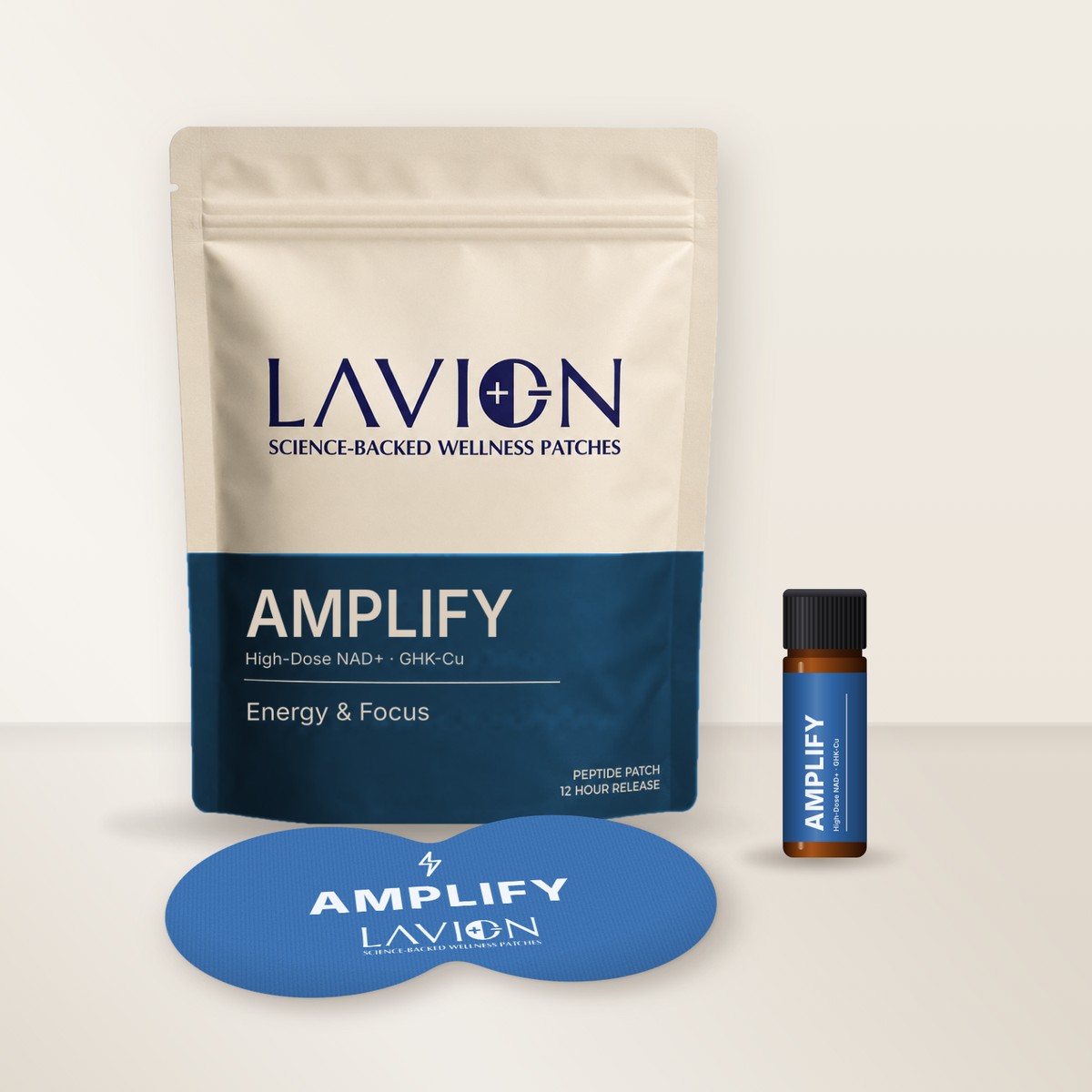
At LavION Wellness, we're interested in the evolving science of cellular health and the technologies that may shape the future of wellness. As researchers continue exploring NAD+ and healthy aging, we're bringing innovation to the way people experience wearable wellness.
Our AMPLIFY formula brings together two ingredients of interest in cellular health research:
- NAD+ — 1,300 mg. Nicotinamide adenine dinucleotide is a coenzyme essential to normal cellular energy metabolism and cellular function.
- GHK-Cu — 5 mg. A naturally occurring copper-binding peptide being studied for its biological properties, including its role in cellular signaling and tissue-related research.
AMPLIFY uses LavION's iontophoresis-based wearable technology, designed for a convenient, needle-free, 12-hour wear experience.
The ingredient quantities listed describe the patch formulation and should not be interpreted as the amounts absorbed into the body. AMPLIFY is not an established treatment for menopause, fatigue, hot flashes, or brain fog, and product-specific clinical studies are needed to establish its delivery performance and health outcomes.
For those curious about emerging wearable wellness technologies, AMPLIFY offers an opportunity to learn more about our approach.
Supporting Your Energy and Well-Being During Menopause
While research into NAD+ continues, there are several evidence-based ways to support your health during the menopause transition.
- Prioritize sleep. Addressing night sweats, hot flashes, and other sleep disturbances can improve quality of life.
- Build and maintain muscle. Resistance training helps support muscle mass, strength, and bone health as women age.
- Focus on nutrition. Adequate protein, fiber, and essential nutrients support overall metabolic health.
- Stay active. Regular physical activity supports cardiovascular health, mobility, and well-being.
- Talk with your healthcare professional. Menopausal hormone therapy and certain nonhormonal treatments have stronger clinical evidence for managing specific menopause symptoms than NAD+ supplementation. [4]
Women's wellness isn't about finding one miracle solution. It's about understanding how your body changes and making informed choices that support your long-term health.
Wellness Through Every Stage of Life: A Personal Perspective

As a woman in midlife, a mom to three daughters, and co-founder of LavION Wellness, I've become increasingly interested in how our bodies change as we age.
I have a teenage daughter who's growing up in a world where conversations about wellness are completely different from when I was her age. And at the same time, I'm navigating my own stage of life and realizing just how much there is to learn about hormones, cellular health, energy, and longevity.
I've also realized how many women are searching for answers about why they feel different as they get older. We talk a lot about hormones, but not nearly enough about the broader science of cellular health and how our bodies function over time.
That's part of what makes LavION so personal to me. I love that we're helping introduce innovative wellness technology while encouraging people to ask questions, understand the science, and take a more proactive role in their health.
Because wellness isn't just about how we feel today. It's about understanding our bodies and making thoughtful choices for the years ahead.
— Jessica Hampton, Co-Founder, LavION Wellness
The Future of Women's Wellness Starts With Better Information
Menopause is a significant biological transition, but it shouldn't mean giving up on feeling strong, capable, and confident.
Women deserve access to research, education, and meaningful conversations about how their bodies change throughout life.
NAD+ research is helping scientists better understand cellular metabolism, aging, and the biological processes that may intersect with women's health. While many questions remain, the growing interest in cellular health is creating opportunities for further research and innovation.
At LavION Wellness, we're excited to be part of the broader conversation about wearable wellness technology and informed, proactive approaches to healthy aging.
Curious about NAD+ and wearable wellness? Explore our needle-free technology and discover the science behind LavION AMPLIFY.
Not sure where to start? Find Your Formula with our personalized product discovery quiz.
Scientific References
- 1.Holmes HE, et al. (2026). Nicotinamide riboside and pterostilbene reduces frequency and severity of undesirable symptoms of the menopause transition: an open-label, pilot clinical trial. Frontiers in Aging. PubMed
- 2.Vinten KT, et al. (2025). NAD+ precursor supplementation in human ageing: clinical evidence and challenges. Nature Metabolism. PubMed
- 3.Zhang J, et al. (2025). Emerging strategies, applications and challenges of targeting NAD+ in the clinic. Nature Aging. PubMed
- 4.The Menopause Society. (2023). The 2023 nonhormone therapy position statement. PubMed
Frequently asked questions
Is NAD+ good for menopause?
NAD+ is essential for normal cellular energy metabolism, but there is currently insufficient clinical evidence that NAD+ supplementation treats menopause symptoms. Early research involving NAD+ precursors warrants further investigation.
Can NAD+ increase estrogen levels?
A small 2026 pilot study observed changes in certain estrogen-related measurements after supplementation with nicotinamide riboside and pterostilbene. This does not establish that NAD+ supplementation reliably increases estrogen or corrects hormonal imbalances.
Does NAD+ help with menopause belly fat?
There is no convincing clinical evidence that NAD+ supplementation specifically reduces menopause-related abdominal fat. Changes in body composition during midlife involve hormonal, metabolic, and lifestyle factors.
Can NAD+ help with menopause brain fog?
NAD+ is involved in cellular metabolism, including processes important to brain function. However, supplementation has not been proven to improve menopause-related brain fog.
Is NAD+ better than hormone replacement therapy?
There is no evidence that NAD+ is a substitute for menopausal hormone therapy. Hormone therapy remains the most effective established treatment for hot flashes and night sweats in appropriately selected patients.
Are NAD+ patches effective?
Iontophoresis is an established delivery technique for certain substances, but effectiveness must be demonstrated for each specific formulation and device. Published clinical evidence does not currently establish NAD+ patches as effective treatments for menopause symptoms.
What is the best way to support energy during perimenopause?
Start by identifying potential contributors to fatigue, including sleep disruption, nutritional deficiencies, medications, and underlying medical conditions. A healthcare professional can help determine appropriate interventions.
Keep reading
This article offers general wellness education and does not replace medical advice. Statements about LavION products have not been evaluated by the FDA, and these products are not intended to diagnose, treat, cure, or prevent disease. Peptide orders include a clinician review before fulfillment. If you are pregnant, nursing, managing a condition, or taking medication, speak with your clinician. See our medical disclaimer.