Why Is GHK-Cu in Every LavION Formula?
GHK-Cu may be best known for skin and collagen, but its potential role extends much further. Discover why this copper peptide is included across LavION formulas and what decades of research tell us about tissue support, oxidative stress, recovery and healthy aging.
Key takeaways
- GHK-Cu is a copper-binding tripeptide being studied for collagen, tissue remodeling, inflammatory signaling, oxidative stress and cellular activity.
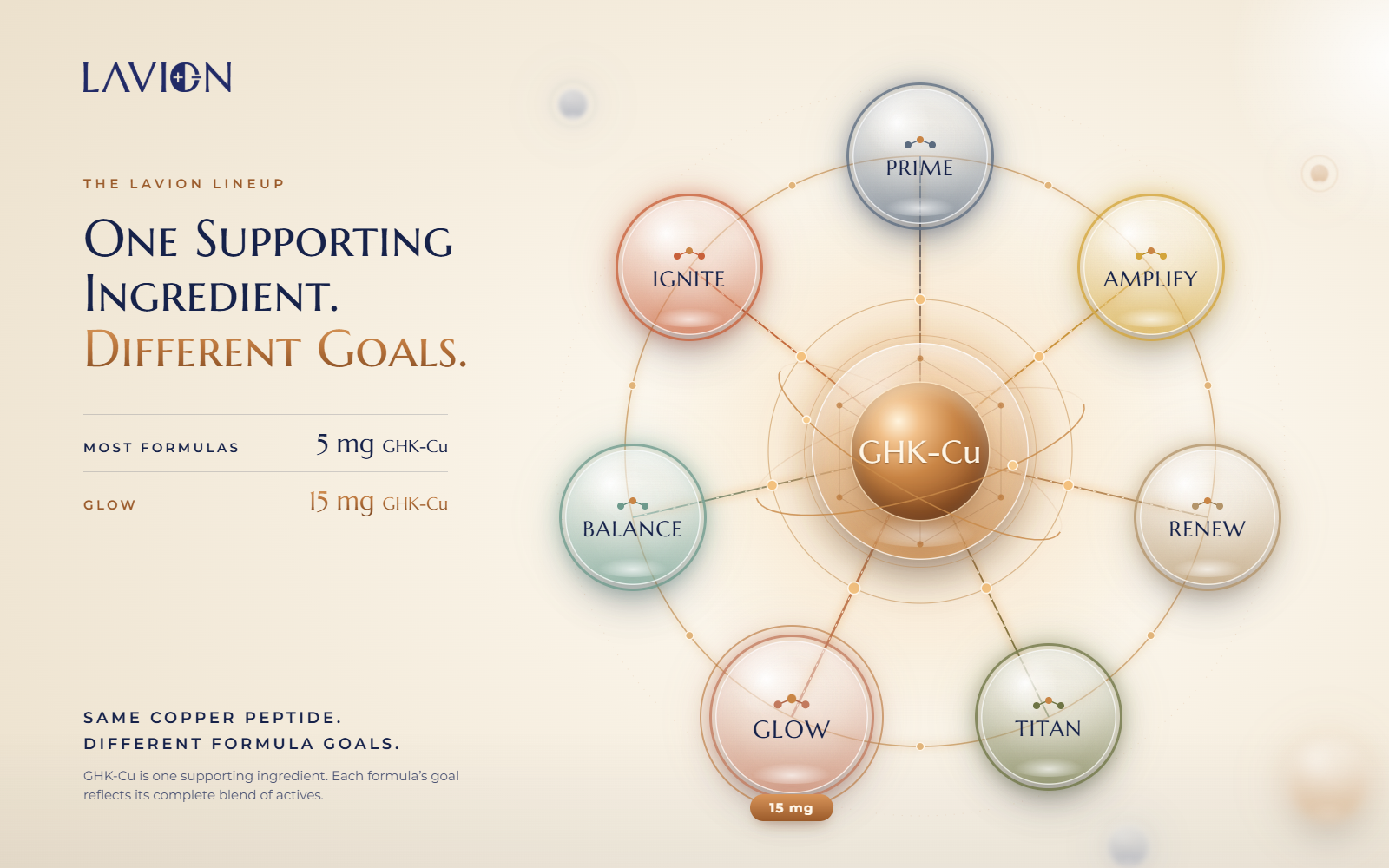
- Most LavION formulas contain 5 mg of GHK-Cu; GLOW contains 15 mg. These amounts describe formula content, not measured delivery.
- 5 mg of GHK-Cu is not 5 mg of copper: the brief’s approximate copper equivalents are 0.8 mg and 2.4 mg for 5 mg and 15 mg of GHK-Cu.
- Promising cell, animal and skin research does not establish whole-body clinical outcomes or identical effects across delivery routes.
New to copper peptides? Read our complete GHK-Cu Copper Peptide Guide.
You may know GHK-Cu as the “copper peptide” associated with skin, collagen and healthy aging.
But at LavION, GHK-Cu isn't limited to a beauty formula.
GHK-Cu is included across our formulas because its potential role extends beyond the appearance of skin. Research has explored GHK-Cu in connection with collagen production, tissue remodeling, oxidative stress, inflammatory signaling and other processes involved in repair and healthy aging.
That makes it a natural complement to the goal-based ingredients found throughout the LavION lineup.
So why is a copper peptide included alongside ingredients like NAD+, glutathione, BPC-157, TB-500, MOTS-c and KPV?
Let's break it down.
What Is GHK-Cu?
GHK-Cu stands for glycyl-L-histidyl-L-lysine copper.
It is a naturally occurring tripeptide made from three amino acids—glycine, histidine and lysine—that binds to a copper ion. GHK was first identified in human plasma in the 1970s and has since been studied for a variety of biological functions.
Research also suggests that circulating GHK levels decline with age, which has contributed to interest in its potential role in healthy aging and tissue repair.
Most people encounter GHK-Cu through skincare because of its association with collagen and skin quality.
But that's only part of the story.
5 Reasons GHK-Cu Is So Interesting
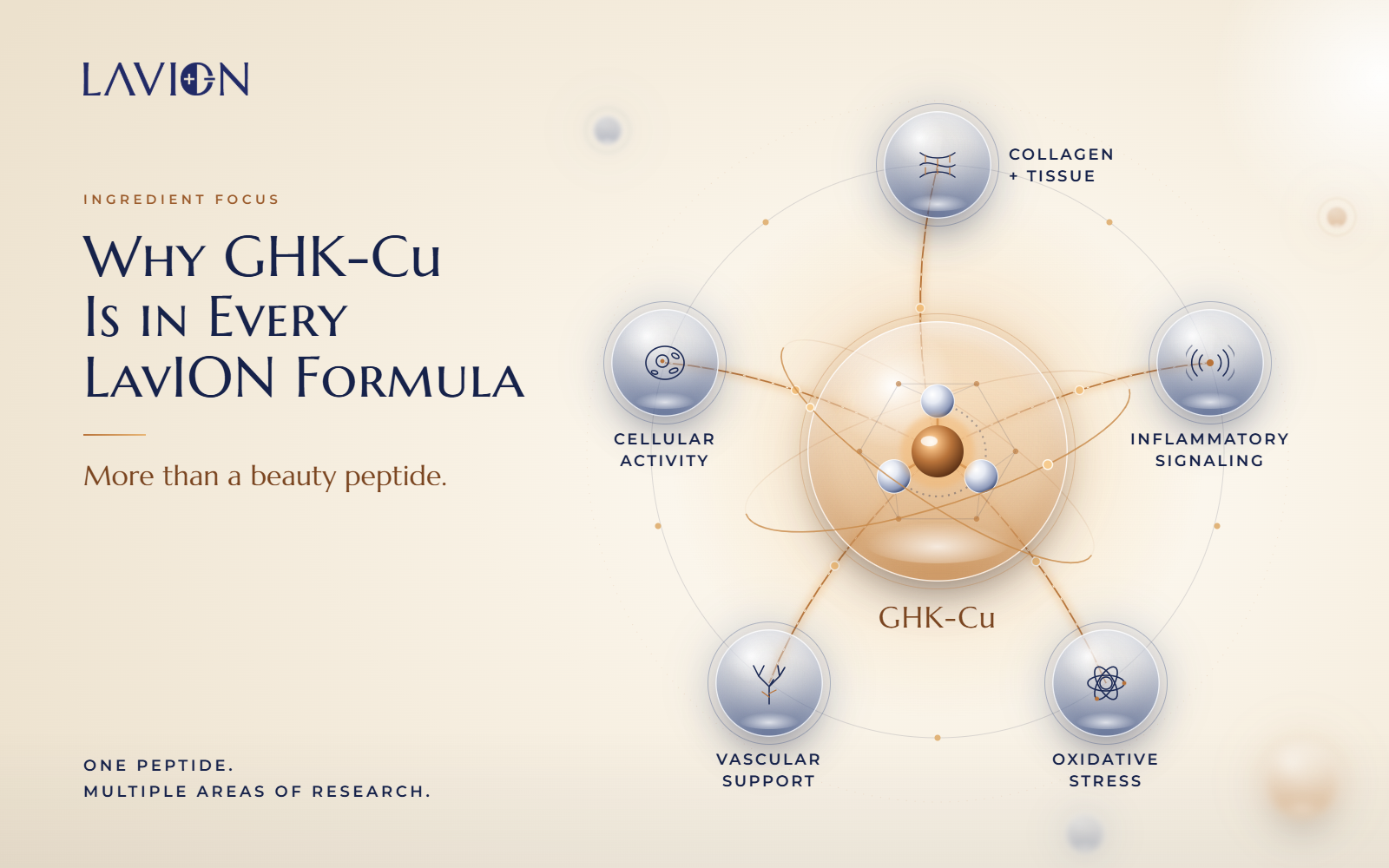
GHK-Cu doesn't appear to act through just one biological pathway. Research has explored several mechanisms that may help explain why the peptide continues to receive attention across regenerative and longevity research.
1. Collagen + Tissue Remodeling
Collagen isn't only about younger-looking skin.
It provides structural support throughout the body, including skin, tendons, ligaments and other connective tissues.
Research has shown that GHK-Cu can influence the production of extracellular-matrix components including collagen, elastin, decorin and glycosaminoglycans. Researchers have also studied its relationship with enzymes involved in collagen breakdown and remodeling.
In simple terms:
GHK-Cu is being studied not only for building new structural components, but also for the remodeling process that helps maintain healthy tissue.
2. Inflammatory Signaling
Inflammation is part of the body's normal response to stress or injury. The problem comes when inflammatory signaling remains elevated longer than necessary.
Preclinical GHK-Cu research has examined its effects on inflammatory pathways including TNF-α, IL-6 and NF-κB.
This is one reason GHK-Cu has attracted interest beyond cosmetic applications and into broader recovery research.
3. Oxidative Stress
Everyday metabolism generates reactive molecules that the body has to manage.
GHK-Cu has been studied for its relationship with antioxidant activity and protection against oxidative damage. Copper itself is also an essential component of superoxide dismutase (SOD1), one of the body's antioxidant enzymes.
This gives GHK-Cu another potential role in supporting the cellular environment in which other ingredients are working.
4. Vascular + Tissue Support
Repair requires resources.
Oxygen and nutrients have to reach tissue, which makes healthy vascular function an important part of normal recovery.
Research has examined GHK-Cu's relationship with growth factors involved in angiogenesis, including VEGF and bFGF.
This is another reason researchers have continued investigating GHK-Cu in the context of tissue remodeling and repair.
5. Cellular + Gene Activity
One of the more interesting areas of GHK research involves gene expression.
Studies have reported that GHK can influence the expression of numerous genes associated with biological processes involved in tissue repair and cellular health.
That doesn't mean GHK-Cu “reverses aging.”
It does help explain why researchers are interested in the peptide far beyond its cosmetic applications.
Why Pair GHK-Cu With Other Ingredients?
This is where the LavION formulas become more interesting.
Each formula has a different goal and ingredient profile. GHK-Cu doesn't replace those ingredients—it brings its own biological properties to the formula.
Think of it as another member of the team.
Depending on the formula, GHK-Cu may be paired with ingredients such as:
NAD+ — associated with cellular energy and processes involved in mitochondrial function.
Glutathione — one of the body's major endogenous antioxidants.
MOTS-c — a mitochondrial-derived peptide being researched for metabolic signaling.
BPC-157 + TB-500 — peptides being investigated in preclinical research for processes related to tissue repair and recovery.
KPV — a peptide studied for its relationship with inflammatory signaling.
The goal isn't to have seven versions of the same product.
Each LavION formula is built around a different wellness goal, while GHK-Cu provides a common supporting ingredient across the lineup. Explore PR1ME, IGNITE, AMPLIFY, BALANCE, RENEW, TITAN.
What About GLOW?
GLOW is different.
While most LavION formulas contain 5 mg of GHK-Cu, GLOW contains 15 mg.
That's because GHK-Cu takes a more prominent role in a formula designed around skin and hair.
Research involving GHK-Cu has examined collagen, elastin and decorin production in skin cells, while other studies have investigated its potential relationship with hair-follicle activity.
So while GHK-Cu supports the broader formulation strategy across LavION, GLOW places a greater emphasis on the copper peptide.
Is That Too Much Copper?
It's a reasonable question.
The “Cu” in GHK-Cu means the peptide is bound to copper—but 5 mg of GHK-Cu does not mean 5 mg of copper.
Copper represents only a portion of the molecular weight of GHK-Cu.
According to the calculations outlined in our provider education materials:
5 mg GHK-Cu ≈ 0.8 mg copper
15 mg GHK-Cu ≈ 2.4 mg copper
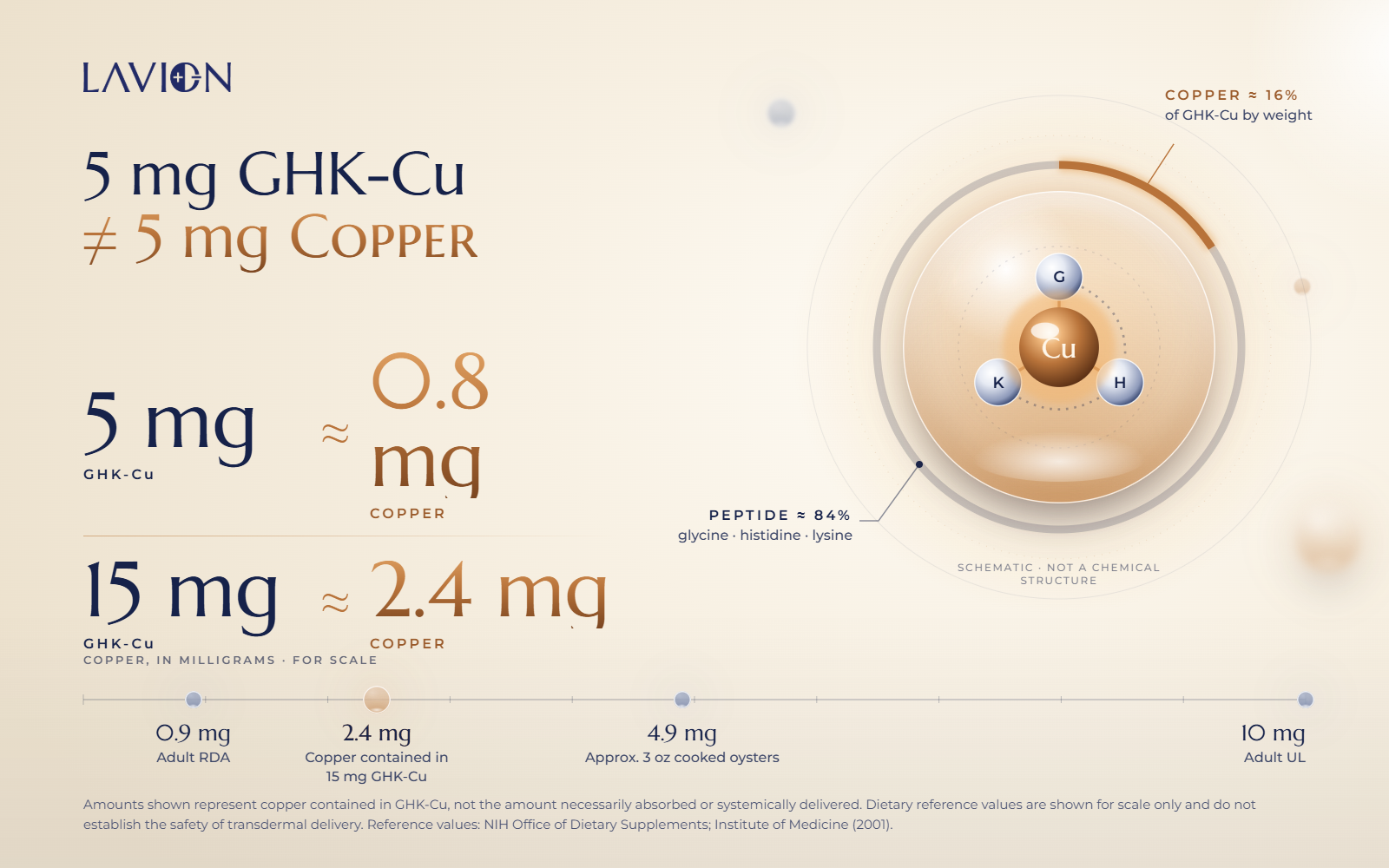
For context, the adult Recommended Dietary Allowance for copper is 0.9 mg per day, while the established adult Tolerable Upper Intake Level is 10 mg per day.
The amount of copper contained in the formula also shouldn't automatically be interpreted as the amount systemically absorbed. Actual delivery and systemic exposure are separate questions.
People with Wilson disease or other disorders of copper storage require special consideration, and total copper intake—including supplements—should be discussed with a qualified healthcare professional.
Why LavION Uses Iontophoresis
LavION isn't a passive sticker.
The wearable patch technology uses iontophoresis, which applies a low electrical current to help move charged molecules across the skin.
GHK-Cu carries a charge, making it particularly relevant to this type of delivery technology. Research has demonstrated penetration and retention of GHK-Cu within human skin in an in-vitro skin model.
LavION's system is designed for 12-hour wear, providing a very different experience from injections or passive topical products.
No needles. No refrigeration. 12-hour wear. Goal-based formulas.
What Does the Research Actually Tell Us?
GHK-Cu has been researched for decades, but it's important to distinguish promising biological research from proven clinical outcomes.
Much of the existing GHK-Cu literature comes from cell studies, animal research and human skin research.
Large human clinical trials evaluating whole-body GHK-Cu delivery are still lacking.
That distinction matters.
The existing research helps scientists understand how GHK-Cu may interact with biological pathways. It does not establish that every proposed benefit will occur in every person—or that every route of administration produces the same effect.
At LavION, we believe wellness education should make that distinction clear.
One Copper Peptide. Different Goals.
GHK-Cu may have become famous for skin, but decades of research have made it interesting for much more.
Its studied relationships with collagen, tissue remodeling, oxidative stress, inflammatory signaling and cellular activity help explain why GHK-Cu appears throughout the LavION lineup.
The other ingredients change based on the goal.
The delivery experience stays simple.
Needle-Free. No Refrigeration. 12-Hour Wear. Goal-Based Formulas.
Not sure which formula fits your goals?
Frequently asked questions
What is GHK-Cu?
GHK-Cu is a naturally occurring copper-binding tripeptide composed of glycine, histidine and lysine. It has been researched for its relationship with collagen production, tissue remodeling, oxidative stress, inflammatory signaling and other biological processes.
Is GHK-Cu only for skin?
No. GHK-Cu is widely known as a skincare ingredient, but research has explored biological functions extending beyond cosmetic applications, including tissue remodeling, antioxidant activity and cellular signaling.
Why is GHK-Cu included in LavION formulas?
GHK-Cu has its own researched biological properties and is included as a complementary ingredient alongside each formula's goal-specific ingredients.
How much GHK-Cu is in a LavION formula?
Most LavION formulas contain 5 mg of GHK-Cu. GLOW contains 15 mg because GHK-Cu has a more prominent role in its skin- and hair-focused formulation.
How does LavION deliver GHK-Cu?
LavION uses a wearable iontophoresis patch designed for 12-hour wear. Iontophoresis uses a low electrical current to assist movement of charged molecules across the skin.
Keep reading
This article offers general wellness education and does not replace medical advice. Statements about LavION+ products have not been evaluated by the FDA, and these products are not intended to diagnose, treat, cure, or prevent disease. Peptide orders include a clinician review before fulfillment. If you are pregnant, nursing, managing a condition, or taking medication, speak with your clinician. See our medical disclaimer.